
Waiting as Proof
The Ache of Being Chalant

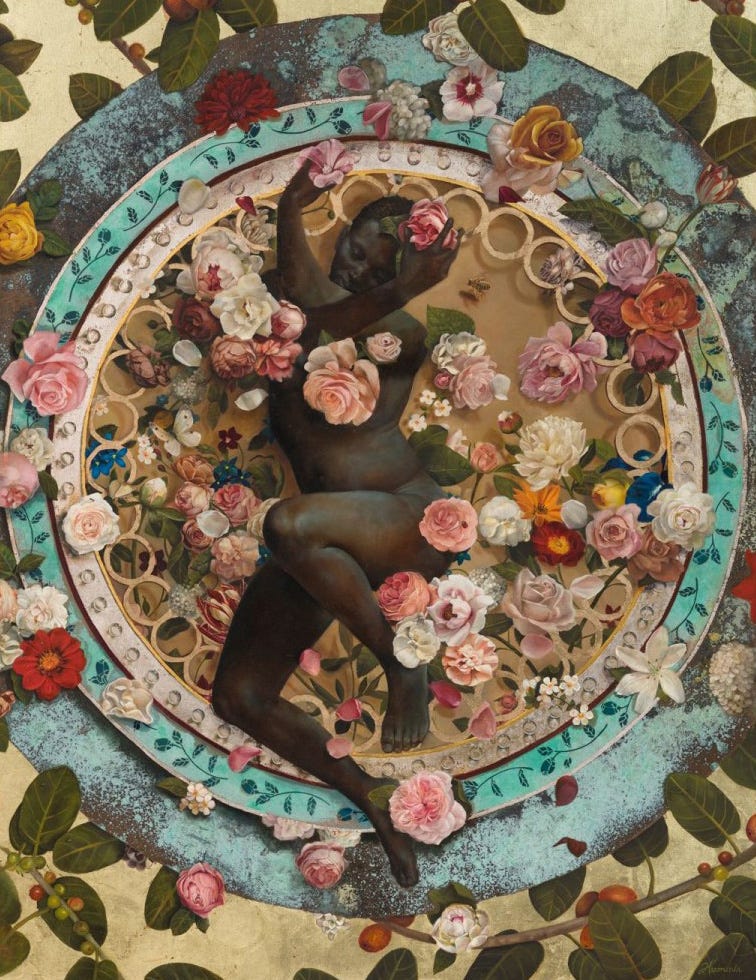
I have never been good at pretending that I don’t care. If I miss you, then I miss you openly, because my heart has never been interested in acting like it doesn’t. If your name crosses the quiet landscape of my mind, I still want to build a bridge between where I am and where you are. If the possibility of hearing from you brightens my day, I cannot dim the light inside me just to make it easier for others to understand. And If I’m waiting, then I’m waiting. I know the risk of leaving a chair empty for someone or something who may never return, but I would rather hold space for that hopeful possibility than fill every silence with something meaningless.
The world keeps telling me these things should be hidden, tucked underneath an invisible cloak wrapped tightly around my being, stitched from pride and self-preservation. Somewhere along the way, longing became something to conceal, honesty became something to ration, and affection molded itself into something you were only allowed to reveal once someone else had gone first. We celebrate nonchalance like its emotional intelligence. We wear it like a badge of honor, praise people who take too fucking long to answer like tomorrow is already promised, loving in the shadows, never revealing too much. When did the act of caring become a humiliation ritual? When did it become embarrassing to yearn with your whole chest?
I am both the act of love and the embodiment of love itself.
One of my favorite mantras is: “I am loving, I am loved, I am love.” So, I don’t think I ever learned how to be embarrassed by the expression of loving deeply, fully. Even in the ruins of my greatest heartbreak, I could never bring myself to look at the pieces of myself I gave away and call them foolish. I refuse to believe that a heart willing to open is something to apologize for. We romanticize distance, applaud emotional restraint, and mistake detachment for depth. And since when did we collectively decide that whoever cared the least had somehow mastered love the most? That’s bullshit.
What kind of world have we built if the highest form of composure is convincing everyone we could leave at any moment? I have spent enough time in that world to know I don’t belong there. Because I am not nonchalant. I am chalant. And maybe chalant is a forgotten virtue. Maybe somewhere in history we buried it beside sincerity, convinced ourselves that surviving was more important than feeling. But I have never wanted to survive love. I have only ever wanted to live inside it.
Until someone can meet me where I have always existed—fully, openly, without fear of being moved—I will stay waiting. Because I would rather wait for a love that knows how to hold me than accept one that only knows how to visit.
People speak about waiting as though it is passive, as though it is a bus stop you unwillingly occupy while life continues moving around you. But waiting has never felt still to me. Waiting is participation. It is making coffee for one while your hands instinctively reach for a second mug. It is slowing your pace because somewhere inside you, your body still believes someone will catch up. It is leaving the porch light on, not because you are certain someone is coming home, but because hope has never learned how to lock the front door. Hope is always the last one awake in the house. Even after everyone else has gone to bed, it still checks the window one more time.
Waiting changes the architecture of your life. It builds rooms for people who may never arrive. It teaches your eyes to mistake strangers for familiar footsteps. It convinces your hand to reach for a phone that hasn’t vibrated until your pocket remembers the shape of anticipation better than your fingers remember rest. And is that so wrong? People think waiting lives inside clocks, but it doesn’t. It lives in muscle memory. It lives in the stories you instinctively save because there is someone you imagined telling them to. It lives in the extra place setting your hands almost reach for before your mind remembers you’re eating alone. There are people whose absence has lasted longer than their presence ever did, and somehow they still occupy more square footage inside me than those who never left. Every person I have loved has built another room inside the house of me. Some stayed long enough to decorate it. Some left before the paint dried. Somehow I still find myself building.
Maybe that is the slow ache of waiting—the way it asks the heart to hold what the hands cannot. Not because it is empty, but because it is unbearably full. Full of conversations that never happened. Full of embraces suspended in another timeline. Full of words rehearsed in the quiet that never found a home. A tether between what was and what’s still to come. And waiting isn’t always just about another person. Sometimes we wait for reciprocity. For recognition. For someone to choose us with the same certainty we choose them. Sometimes we wait for permission to stop hoping, only to realize hope has roots that grow deeper than our own resolve
Chalant has weight. And when it has nowhere to go, it doesn’t dissolve into the ethers. It settles beneath the ribs like rainwater caught inside the curve of a leaf after a storm. It fills the lungs until even breathing feels like remembering. The moon has never apologized for moving oceans and the sun has never said “I’m sorry” after shining bright and alone all day. Yet, somehow we are expected to apologize for moving toward one another. We are told not to revolve around anyone, as though gravity itself were something shameful. But I have never known gravity to beg. It simply holds. Maybe love, and our ability to care deeply about someone or something outside of yourselves was always meant to work in the same way. Perhaps that is why nonchalance has become so desirable. Not because people care less, but because they are afraid of discovering just how much they do.
Nonchalance isn’t confidence. It’s insurance.
If I pretend you never mattered, then I never have to admit your absence rearranged me. If I answer late enough, maybe I can convince myself I wasn’t hoping to hear from you at all. If I never reach out first, I never have to know whether you would’ve reached for me return. We negotiate intimacy like a business transaction, measuring every confession against the possibility of rejection, as though vulnerability is poor strategy and whoever cares less somehow wins. But love was never meant to be negotiated. Cathedrals were not built by people afraid of devotion. They were built by hands that understood some things are worth spending a lifetime reaching toward, even if they never live to see the finished ceiling.
If our lives crossed, I want to believe it meant something. Maybe only for a season or only for a chapter. Maybe only long enough to leave fingerprints on each other’s souls before life turned the page. I refuse to dishonor that by pretending I was untouched. There are people I carry with me the way museums carry fossils. They preserve the shape of something long after it has stopped breathing because what remains is still worthy of reverence. I don’t think love disappears when people do. I think it becomes part of the exhibit. We return to it quietly, forehead pressed against the glass, remembering the shape of something that once made us feel alive.
People often say they’re protecting their peace, but I wonder how often we’re really protecting our fear. Fear asks us to mute our excitement, soften our tenderness, and swallow our longing before it reaches the surface. It tells us that if we make ourselves appear untouched, rejection will lessen the wound. But my feelings have always roared loudly inside me like a tigress on the prowl. It has always entered like light through stained glass—gentle enough to warm me, powerful enough to color everything it touches. It has always rearranged the furniture inside my soul before I even realized someone had walked through the door.
So here I am, waiting patiently.
Not because waiting guarantees arrival, and not because every story circles back to the people we hoped it would, but because waiting reminds me that my heart is still capable of making room and welcoming new places, people, and things. There’s a delicate balance to it, but I’d rather become a warm home with multiple guest rooms than a fortress no one ever dares to enter. Keep your nonchalance; a policy against disappointment. Against grief. Against ever having to admit that another human being had the power to move the furniture inside your own soul.
I have never wanted to be insured against love. If caring leaves me aching, then at least I know I lived honestly. If waiting leaves the porch light burning a little longer than it should, then let it burn.
I’ve never read “waiting” described with so much depth and emotion. I learnt a lot from this piece and I am bamboozled by your sagacity.
Wow. This hit deep. It just made me realise how I have been so hurt lately I have stopped waiting. I didn’t used to be that way. I have work to do now. Warmth to find. Thank you.